Treatment and Management
Nonpharmacologic Management of IH
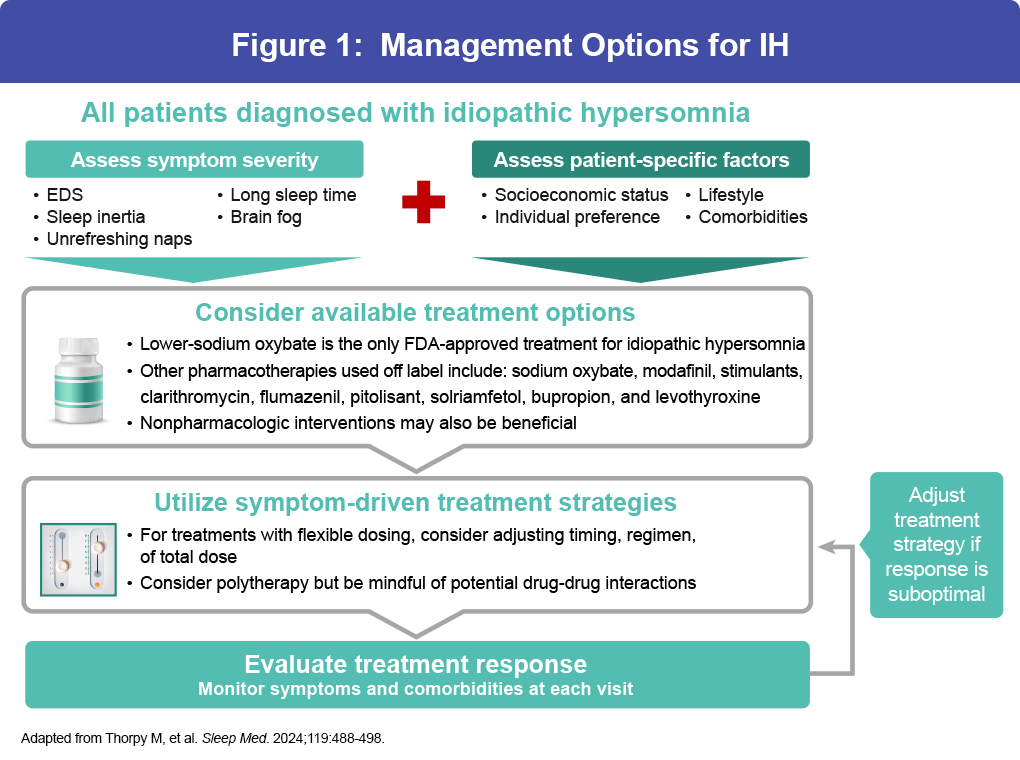
The graphic below (Figure 1) shows potential treatments for patients with IH. The vast majority of patients with IH (96%) typically use at least one non-pharmacologic strategy, which may include caffeine, daytime naps and scheduling of nighttime sleep.1 Other such as exercise, diet, temperature manipulations, chewing gum, mindfulness, and yoga can also be tried. However, these methods are often ineffective or difficult to sustain.
Medication Used for IH
FDA Approved Option: Lower-Sodium Oxybate
Use of calcium, magnesium, potassium and sodium oxybates – also known as lower-sodium oxybate – was the first treatment approved for IH by the FDA.3 As the name suggests, “lower-sodium” oxybate contains 92% less sodium than regular sodium oxybate.4,5,6 This is important when considering cardiovascular health. Ordinary sodium oxybate increases sodium intake to at least 550 to 1640 mg daily from medication doses alone. This may increase CV risk by raising blood pressure and elevating the risk of CV events such as strokes.6,7 Patients with IH have an elevated baseline CV risk compared with comparable individuals lacking sleep disorders. Thus, thinking about CV risk is a crucial element of care for patients.8
Off-Label (Non-FDA-Approved) Options2
- Bupropion and other alerting antidepressants
- Clarithromycin
- Flumazenil
- Levothyroxine
- Modafinil/armodafinil
- Pitolisant
- Sodium oxybate (regular and extended-release)
- Solriamfetol
- Traditional stimulants (eg, amphetamines and methylphenidate)
Based on your individual symptoms and history, your doctor or caregivers may use one of the above agents. Also, since IH symptoms can vary over time, your caregiver should be checking in with you at each office visit to make sure the medication is working for you.
References
- Neikrug AB, Crawford MR, Ong JC. Behavioral sleep medicine services for hypersomnia disorders: A survey study. Behav Sleep Med. 2017;15:158-171. doi:10.1080/15402002.2015.1120201
- Thorpy MJ, Krahn L, Ruoff C, Foldvary-Schaefer N. Clinical considerations in the treatment of idiopathic hypersomnia. Sleep Med. 2024;119:488-498. doi:10.1016/j.sleep.2024.05.013
- Morse AM, Dauvilliers Y, Arnulf I, et al. Long-term efficacy and safety of low-sodium oxybate in an open-label extension period of a placebo-controlled, double-blind, randomized withdrawal study in adults with idiopathic hypersomnia. J Clin Sleep Med. 2023;19:1811-1822. doi:10.5664/jcsm.10698
- Heo YA. Calcium, magnesium, potassium and sodium oxybates (Xywav®) in sleep disorders: A profile of its use. CNS Drugs. 2022;36:541-549. doi:10.1007/s40263-022-00912-6
Dauvilliers Y, Chenini S, Thobois O, et al. Efficacy and safety of sodium oxybate in adults with idiopathic hypersomnia: a randomized controlled trial. Neurology. 2025;104(11):e213690.
- Avidan AY, Kushida CA. The sodium in sodium oxybate: Is there cause for concern? Sleep Med. 2020;75:497-501. doi:10.1016/j.sleep.2020.09.017
- Junnarkar G, Allphin C, Profant J, et al. Development of a lower-sodium oxybate formulation for the treatment of patients with narcolepsy and idiopathic hypersomnia. Expert Opin Drug Discov. 2022;17:109-119. doi:10.1080/17460441.2022.1999226
- Bock J, Covassin N, Somers V. Excessive daytime sleepiness: An emerging marker of cardiovascular risk. Heart. 2022;108:1761-1766. doi:10.1136/heartjnl-2021-319596
All URLs accessed September 2, 2025